
Reading time: 5 minutes
Written by Gwladys Lecomte
📌 Key points to remember
- Robustness ≠ performance : being robust means prioritizing margins of maneuver and the ability to absorb shocks, at the cost of less short-term optimization.
- The compromise is universal : from the airplane designed for turbulence to the tree in the wind, robustness is a law of life directly applicable to organizations.
- CSR as a result, not as a constraint : creating the conditions for robustness naturally brings forth responsible and sustainable practices.
- The fluctuating world calls for robustness : in the face of geopolitical, ecological, and economic instabilities, the most optimized organizations are often the most fragile.
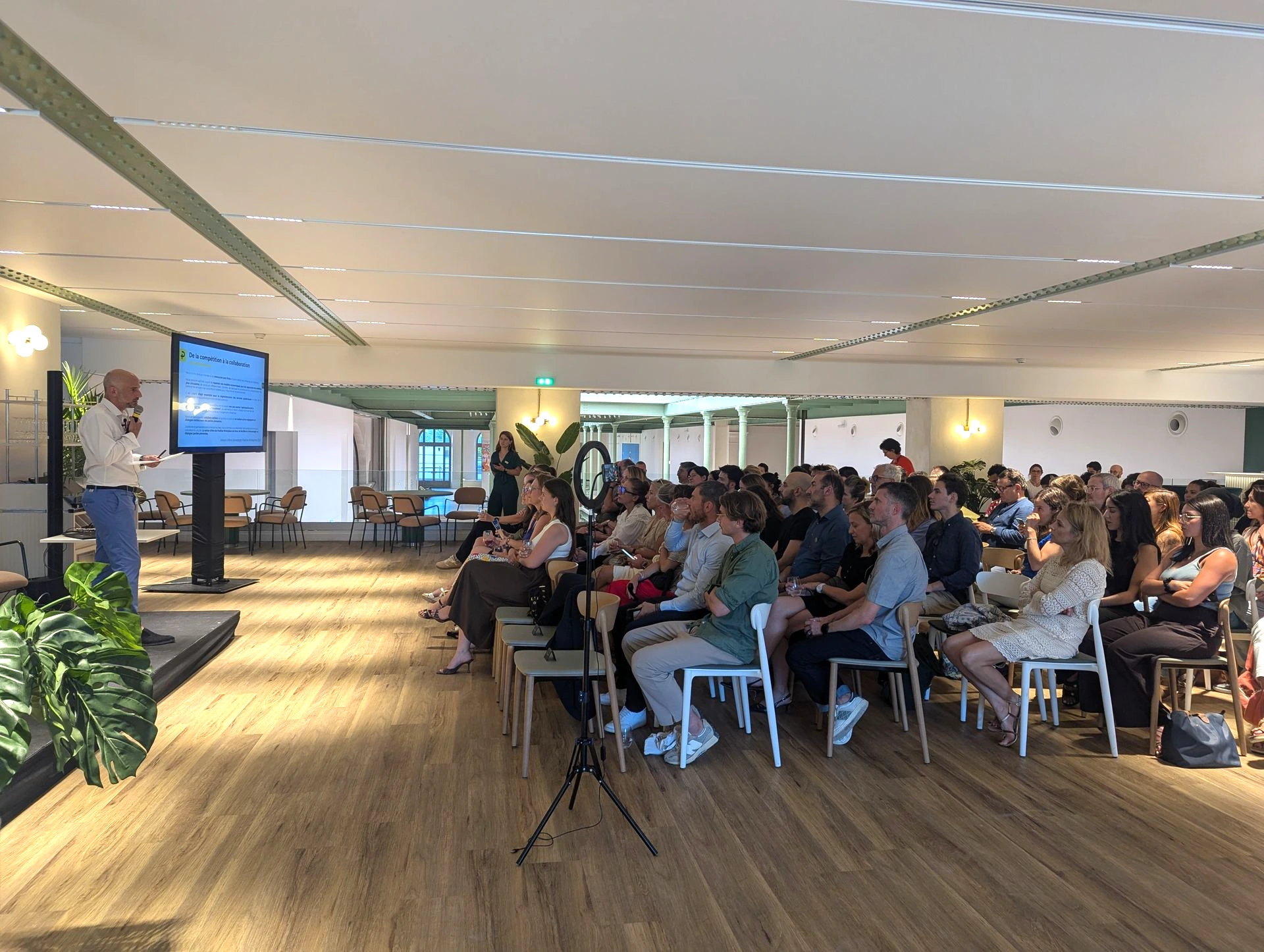
Wednesday, June 17, over 100 people gathered for Positive Day 2026 at the Reseda Café. This year, Positive Company® chose a theme that goes against the constant pressure for performance: resilience.
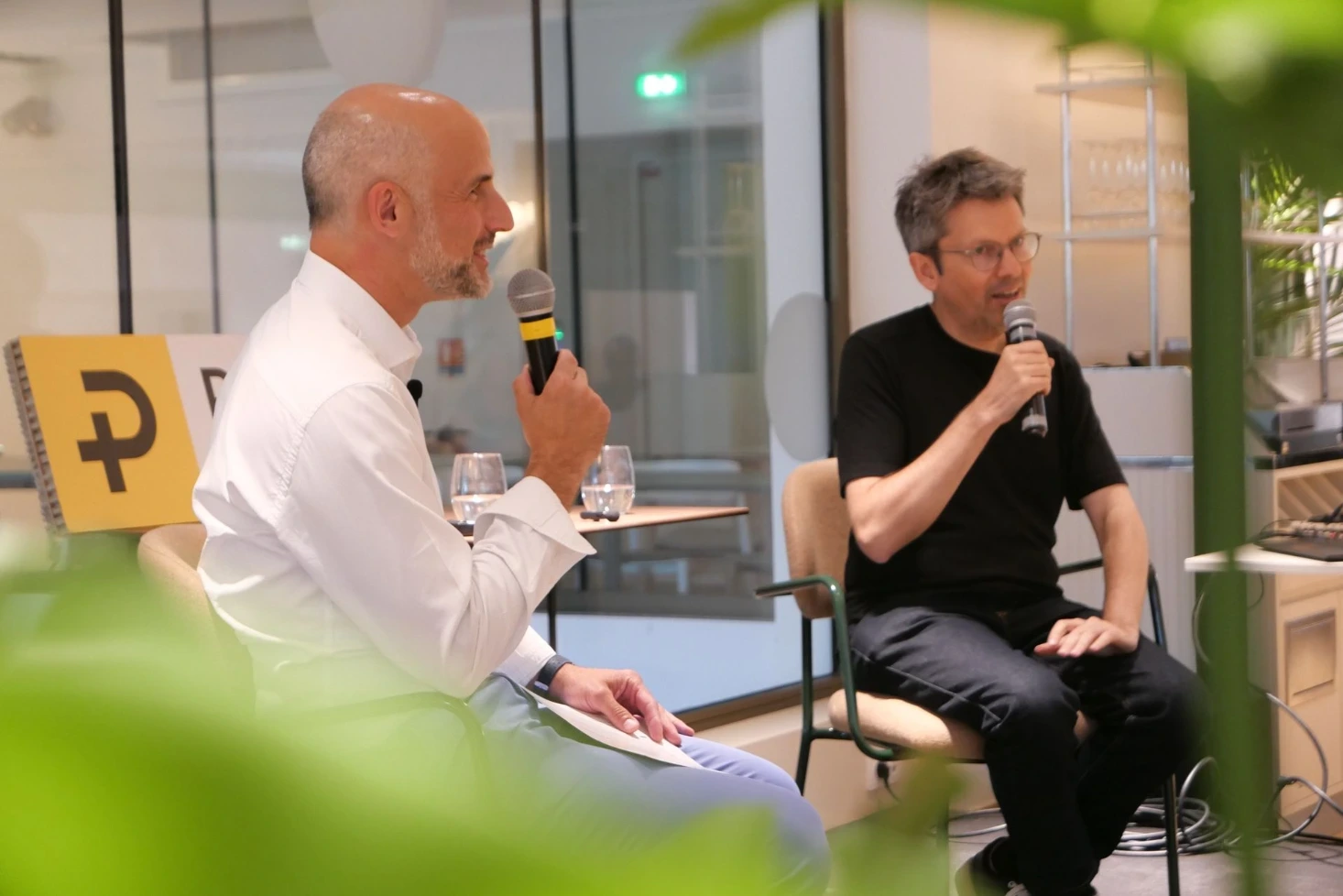
The guest of the evening, Olivier Hamant, a researcher in plant biology and director of the Michel Serres Institute, came to share a perspective on life that challenges traditional economic models — and resonates directly with the corporate social responsibility transformation issues faced by companies.
🌳 Robustness vs performance: two logics, one compromise
From the outset of the exchange with Charles-Henri Margnat, Olivier Hamant made a clear distinction. According to him, performance is defined as the sum of effectiveness (achieving one's goal) and efficiency (with the least resources possible). Robustness, on the other hand, is "the ability of a system to be stable and viable in fluctuations."
The word comes from Latin quercus robur, the oak: a tree stable in the wind, viable against frost and drought.
For Olivier Hamant, this compromise is universal: "When you are robust, it means you have margins of maneuver, that you are capable of absorbing shocks; and therefore you are mechanically less effective, less efficient."
🎥 Relive Olivier Hamant's complete intervention in video
🌱 What living beings teach us
Drawing on his expertise as a biologist, Olivier Hamant proposed a simple image: what if the company were a tree? Lots of redundancy (leaves, branches, roots), a deliberately imperfect energy yield, a growth that slows itself down as it progresses. According to him, "all of this is underperformance, but in service of robustness."
This biological perspective on robustness is not new, but it has gained traction since the 2000s, with a shift from a molecular approach (very performance-oriented) to a systemic approach to life, where robustness, rather than performance, comes first as soon as one observes a network as a whole.
🏭 From theory to business: two concrete examples
When asked about the practical application of this principle in business, Olivier Hamant cited the example of an airplane designed to withstand turbulence: redundancy of systems (three autopilots on three distinct electrical circuits), operating at 50% of its maximum capacity. According to him, "the airplane is robust before it is efficient — whereas very often, we would tend to say the opposite."
In the economic field, he mentioned the experiment conducted by Decathlon in Belgium, comparing production economy and functionality economy (rental, repair, sharing of objects) over three years. According to Olivier Hamant's remarks during this presentation, this shift would have allowed for a threefold reduction in costs for customers, a sixfold increase in the brand's results, and a reduction in carbon footprint by a factor between 15 and 30. These figures have not been independently verified by Positive Company®; they are reported as stated by the speaker.
🧭 CSR, sovereignty, and new narrative
On the issue of the CSR discourse, in a context of regulatory relaxation in Europe, Olivier Hamant proposed a change in perspective: "The fluctuating world means that the long term comes to the present." For him, CSR should no longer be the starting point of the discourse, but its consequence: "If we create conditions for robustness and that brings forth CSR, then that's great."
He also linked robustness and territorial sovereignty, relying on the example of agroecology as an avoided expense rather than an additional constraint.
L'échange s'est conclu sur une note tournée vers l'avenir : "Le monde qui vient est plus joyeux que le monde qu'on quitte." Une phrase qui a marqué de nombreux échanges informels tout au long de la soirée.
🏆 Positive Awards 2026: the winners of the year
The evening continued with the presentation of the Positive Awards 2026:
- Audience Award: Collective #AllInThisTogether (Julie Quintard and Delphine Maussion)
- Best Progression Label: IDS Media (Véronique Durrieu and Chloé Lavieuville)
- Best scoring supplier progress: USINA28 (Christophe Riguidel and Jean-Luc Normand), for NaTran (Karina Doukari)
Congratulations to all the certified companies, Scoring users, partners, and friends of Positive Company® present that evening.
🤝 Build, you too, a more robust organization
Beyond an evening of exchange, Positive Day 2026 reminded us of a shared conviction among all certified companies: CSR transformation is not a constraint, but a path to greater resilience and economic relevance.
Do you want to engage your company in this approach and have your CSR actions recognized?
❓ FAQ — Positive Day 2026
Positive Day is the annual event organized by Positive Company®, bringing together certified companies, users of Scoring by Positive®, partners, and stakeholders engaged in CSR. The 2026 edition took place on Wednesday, June 17 at Réséda Café in Paris, and gathered more than 100 participants.
Olivier Hamant is a researcher in plant biology and director of the Michel Serres Institute. He is the author of Antidote to the Cult of Performance (Gallimard). His work focuses in particular on the concept of robustness of living systems and its applications to human organizations.
Robustness is defined as "the ability of a system to be stable and viable in fluctuations." It opposes the logic of pure performance (maximum efficiency + effectiveness) by integrating margins of maneuver, redundancy, and heterogeneity; at the cost of less short-term optimization.
In a context of increasing geopolitical, ecological, and economic fluctuations, Olivier Hamant argues that the most performant companies (because they are the most optimized) are also the most fragile in the face of shocks. Robustness allows an organization to remain viable over time, even in an unstable environment.
The Positive Awards recognize each year companies or collectives distinguished by their CSR commitment. In 2026, three awards were given: the Public Prize, the Best Label Progress award, and the Best Supplier Scoring Progress award.
🔗 Sources
- Olivier Hamant, Antidote to the Cult of Performance, Gallimard, 2024
- Collective larobustesse.org
- Transcription of Olivier Hamant's intervention at Positive Day 2026, June 17, 2026, Paris