
Reading time: 8 minutes
Written by Violette Demain- Article published in November 2023, updated in May 2026
In summary
- An effective CSR supplier evaluation method is based on 5 criteria: scope, depth of analysis, data quality, cost to the supplier, and support
- There are 4 main approaches: self-declaration questionnaire, on-site audit, standardized third-party platform, custom solution with support
- Regulatory obligations (duty of vigilance, CSRD, CS3D) require documenting and tracking the process
- The main barrier to participation rates: charging suppliers for the evaluation
Increasingly, companies feel the need to monitor and evaluate the Corporate Social Responsibility (CSR) of their suppliers. In other words, to assess their own value chain.
This awareness is no longer just ethical. It is now legal. Between the duty of vigilance, the CSRD directive, and the CS3D directive, which is gradually extending to the entire supply chain, French and European clients have no choice: they must structure, document, and manage the evaluation of their suppliers.
To meet this growing demand, many solutions have emerged. But in the face of their diversity, how do you choose the one that best suits your organization? This article guides you through the available methods, the essential criteria for making the right choice, and the questions to ask yourself before getting started.
Why evaluating CSR suppliers has become essential
For a long time, the CSR assessment of suppliers was a voluntary approach, reserved for the most advanced large companies. That time is over.
Three texts have changed the game sustainably:
The Duty of Vigilance Law (2017)requires companies with more than 5,000 employees in France (or 10,000 worldwide) to establish a vigilance plan covering social, environmental, and governance risks related to their supply chain. Failing to document this process exposes the company to sanctions and legal challenges.
The CSRD Directivegradually requires European companies to publish non-financial data on their entire value chain — including suppliers. The data collected during supplier assessments directly feeds into these reports.
The CS3D Directivegoes further by imposing due diligence on human rights and the environment beyond tier 1 of the supply chain. It strengthens the obligation to identify, prevent, and remedy negative impacts with its business partners.
As a result: according to the ObsAR 2025 barometer, 64% of private sector companies have now implemented a CSR assessment system for their suppliers. The remaining 36% are taking on increasing legal and reputational risks.
The 4 main methods of CSR supplier assessment
There is not just one way to assess suppliers. Approaches vary depending on the desired depth, available resources, and the size of the panel to be covered.
1. The self-declaration questionnaire (SAQ)
This is the most common method. The supplier responds online to a structured questionnaire about their environmental, social, and governance practices. The responses may be accompanied by supporting documents.
Advantages:quick to deploy, cost-effective, covers the entire panel regardless of size, accessible to small and medium-sized supplier companies.
Limitations:relies on the supplier's declaration. Without verification of evidence, the risk of reporting bias is real.
2. On-site audit
An external auditor visits the supplier to verify their CSR practices in real time. This is the method that offers the highest level of verification.
Advantages:first-hand verified data, identification of deep risks.
Limitations:high cost, complex logistics, can only cover a limited number of suppliers per year. Difficult to generalize across a large panel.
3. Standardized third-party platform
External organizations like EcoVadis, Provigis, or ACESIA offer standardized assessments based on common frameworks recognized by the market.
Advantages:external credibility, shared framework among multiple clients, possible pooling.
Limitations:cost often charged to the supplier (a major barrier for SMEs), little customization according to the specific issues of the client, generic framework that does not always reflect sector priorities.
4. Customized platform with support
Some solutions combine a common framework (ISO 26000, CSRD) and customizable questions based on the issues of the client, with human support throughout the deployment.
Advantages:tailored to sector-specific characteristics, higher response rates due to support, actionable data for purchasing decisions and CSRD reporting.
Limitations:requires initial framing with the client.
Discover Scoring by Positive® Learn moreThe 5 essential criteria for choosing your method
1. The scope of the assessment
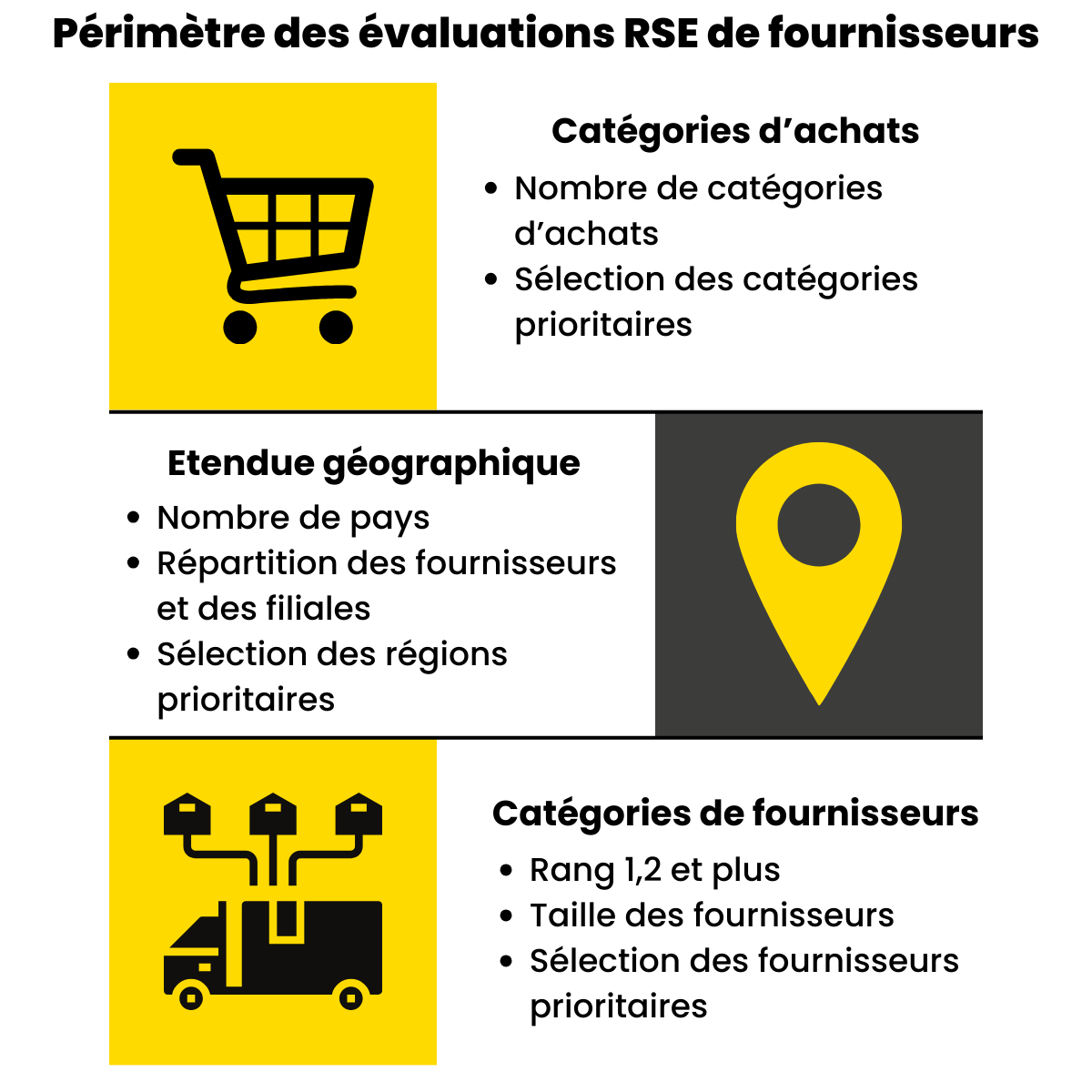
The first essential point is to check if the method can cover your entire supply chain. Each value chain is unique, with specific characteristics related to its sector and geographical location.
Ask yourself these questions: how many suppliers do you need to evaluate? How far down the subcontracting chain do you need to go? Do you have international suppliers with different regulatory contexts? The chosen solution must be able to adapt to these particularities and be configured according to the rules and needs of your company.
2. The scope and level of analysis
Companies are currently facing significant legislative changes. When it comes to evaluating suppliers, it becomes imperative to detect and anticipate a variety of risks: human rights violations, environmental damage, health threats, corruption.
That is why it is essential to choose a method that complies with legislation and allows for the evaluation of all suppliers using a wide range of criteria. The depth of investigation should be proportionate to the level of risk: a documentary assessment is sufficient for low-stakes suppliers, while a more in-depth audit is necessary for strategic or exposed suppliers.
3. The quality and comparability of data
When it comes to collecting information on suppliers' CSR, there are two approaches: data collection via a questionnaire or assessment based on tangible evidence. In both cases, it is crucial that the data is clear and comparable.
The evaluation system must not only identify risks but also translate the data into performance indicators that are comparable between suppliers, allowing for the setting of objectives and prioritization of actions. A trust index (which measures the quality of the supporting documents provided) is a valuable asset for distinguishing what is reported from what is proven.
4. The cost to your suppliers
This is the most often overlooked criterion and the most determining factor for participation rates.
When the assessment is charged to the supplier, SMEs and micro-enterprises refuse or hesitate. You end up with a partially evaluated panel, precisely where the risks are least visible. Before choosing a solution, clearly ask the question: who pays for the assessment? If it is the supplier, anticipate a low participation rate among your panel of small suppliers.
5. Support and assistance
It is essential to select an organization that goes beyond evaluation by providing real support in two areas. First, convincing suppliers to participate despite time constraints. Second, supporting them to progress once evaluated, as a score alone does not lead to improvement.
Suppliers should be considered as partners, and the evaluation should be seen as a way to strengthen this relationship, not just a simple compliance exercise. A dedicated consultant, structured follow-ups, and post-evaluation debriefings make a concrete difference in the results.
What the regulations say in practice
Choosing a CSR evaluation method does not happen in a regulatory vacuum. Here is what the texts concretely impose on clients:
Duty of vigilance:you must be able to document that you have identified and assessed CSR risks in your supply chain. Any serious method — questionnaire or audit — constitutes proof of due diligence, provided it is tracked and regularly updated.
CSRD:you must publish non-financial data on your value chain. Supplier evaluations provide part of this data — as long as the framework used is aligned with the ESRS (European Sustainability Reporting Standards).
CS3D:the directive requires going beyond tier 1 of the supply chain for the most serious risks. Your method must allow for the identification of high-risk suppliers and prioritize corrective actions.
The 5 criteria for choosing your CSR supplier evaluation method — summary
- The scope— does the solution cover your entire panel, including tier 2 suppliers and SMEs?
- The depth of analysis— does it go beyond self-reporting with a verification of supporting documents?
- The comparability of data— does it produce comparable scores between suppliers to prioritize your actions?
- The cost for the supplier— is it free for your suppliers, or could it hinder their participation?
- Support— do you benefit from human support for deployment and interpretation of results?
💡 Scoring by Positive: the custom CSR assessment for clients
Founded in 2022, Scoring by Positive is a supplier CSR assessment solution that directly addresses the limitations of standardised market approaches.
What differentiates Scoring:
- Free for your suppliers— it is the client who manages and finances the assessment. Maximized participation rate, including for SMEs.
- Custom framework— a common foundation based on ISO 26000 and the CSRD, enriched with 3 to 8 targeted questions on your specific issues.
- Trust index— a unique indicator (green / yellow / red) that measures the quality of the supporting documents provided, to distinguish between declaration and proof.
- Human support— a Positive Company consultant follows your deployment, manages follow-ups, and helps you leverage the results.
"It is the personalized approach that convinced us — there are no other tools for e-commerce." Juliette Dubois-Tailliez, CSR Project Manager, La Redoute
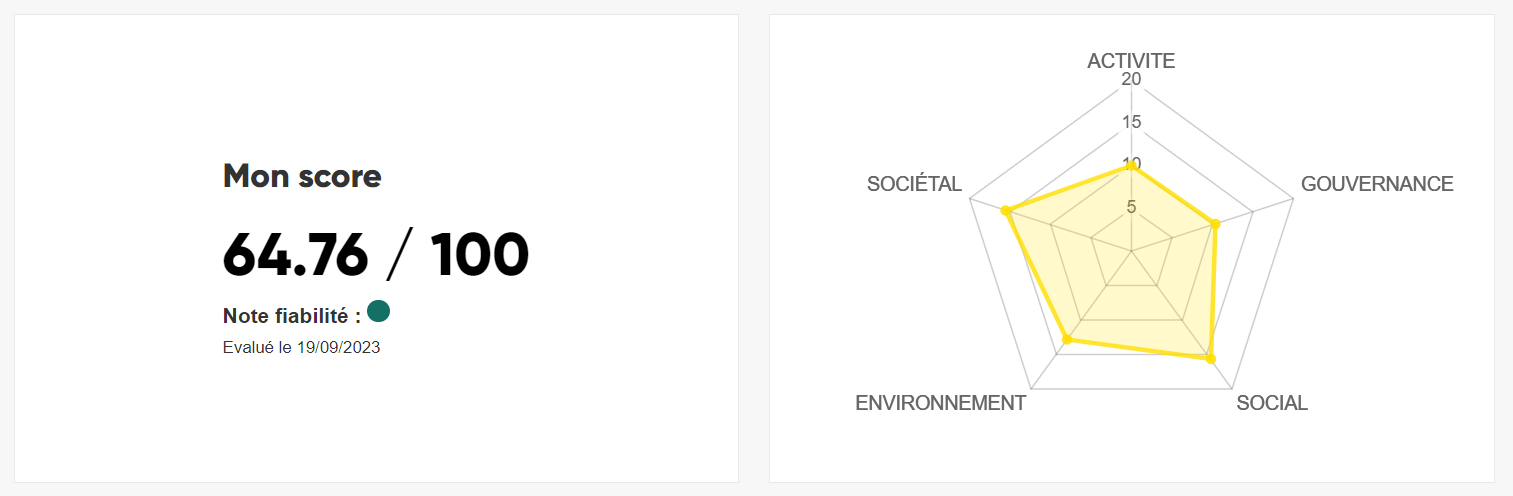
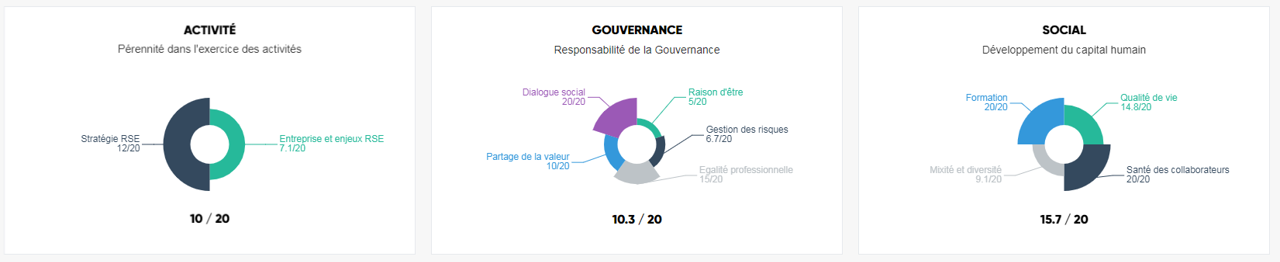
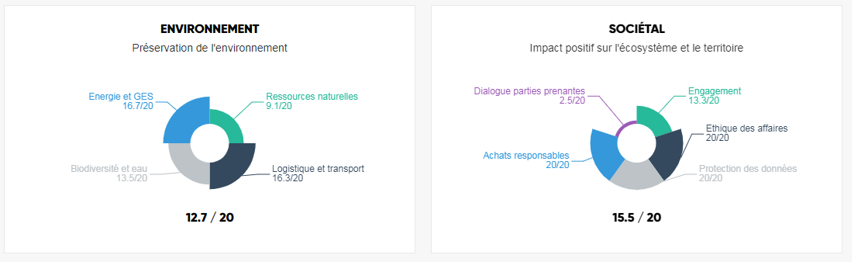
Discover Scoring by Positive® Learn moreExample of themes evaluated with Scoring, our custom supplier assessment solution:
Conclusion
In summary, choosing the right CSR supplier evaluation method involves selecting a solution that fits your needs, covers your entire panel, produces actionable data that complies with regulatory requirements, while remaining accessible for your suppliers.
There is no universal method. The right approach is the one that matches your CSR maturity level, the size of your panel, and the regulatory obligations that apply to you. What matters is to start: an imperfect but deployed evaluation is better than a perfect project that is never launched.
Ready to structure the CSR evaluation of your suppliers?
Scoring by Positive supports clients in deploying customized evaluations — without charging your suppliers for the process.
Discover how Scoring by Positive® worksFAQ - Supplier CSR Evaluation
An evaluation questionnaire (SAQ) is based on the supplier's statements, supplemented or not by supporting documents. It is quick, cost-effective, and can cover an entire panel. An on-site audit involves direct verification by an external auditor: more reliable, but costly and difficult to generalize. Both approaches are complementary — the questionnaire to cover broadly, the audit to delve deeper into at-risk suppliers.
No. EcoVadis is one tool among others. The duty of vigilance does not impose a specific solution — it requires documenting an approach to identifying and preventing risks. Any structured, traceable, and regularly updated method can serve as evidence of due diligence.
With an appropriate solution, the initial framing takes one to two weeks. The collection phase from suppliers generally lasts four to six weeks depending on the size of the panel. The first consolidated results are available in less than two months.
The main barrier is financial: if the assessment is charged to the supplier, SMEs do not participate. Choosing a free solution for suppliers significantly increases the response rate. Human support with structured follow-ups and a "partnership rather than control" approach complements this system.
The priority criteria depend on your sector and regulatory obligations. Generally, the key themes are: environment (emissions, waste, energy), social (working conditions, human rights, health and safety), governance (ethics, anti-corruption, transparency), and responsible purchasing (practices towards one's own suppliers). The ISO 26000 standard structures these 7 central questions.
The results allow for segmenting the panel by CSR risk level, identifying priority suppliers for a corrective action plan, integrating CSR criteria into tenders, and feeding the CSRD reporting on the value chain. They can also highlight the best-performing suppliers in purchasing decisions.
It is not yet formally mandatory for all mid-sized companies, but the CS3D directive and the CSRD are gradually extending obligations to smaller businesses. In anticipation, many industrial mid-sized companies are already structuring their supplier assessments to secure their future compliance and meet the requirements of their own clients.