Temps de lecture : 7 min
Ecrit par Florian Masseube
La RSE est aujourd’hui au cœur des transformations des organisations. Pourtant, de nombreuses entreprises se heurtent à une difficulté majeure : comment passer d’une démarche RSE pilotée par une direction à une dynamique réellement incarnée par l’ensemble des collaborateurs ?
Pour répondre à ce défi, certains modèles organisationnels ouvrent des perspectives nouvelles. L’entreprise libérée, popularisée par Isaac Getz et approfondie par Frederic Laloux avec le modèle OPALE, propose une autre manière de penser la gouvernance, la relation au travail et l’engagement collectif.
Et si ces principes pouvaient devenir un levier puissant d’appropriation et de performance RSE ?
1. L’entreprise libérée en quelques mots
L’idée centrale de l’entreprise libérée : supprimer les freins hiérarchiques et bureaucratiques qui brident l’initiative, pour permettre aux collaborateurs de prendre des décisions et de s’impliquer pleinement.
C’est un cadre où chacun peut exercer son autonomie au service d’une raison d’être partagée.
Des pionniers français comme FAVI (fonderie), Poult (biscuits), ou Chronoflex (services techniques) en sont devenus les emblèmes, tout comme la MAIF, qui a repensé sa gouvernance autour de la confiance et de l’implication collective.

2. Le modèle OPALE : trois principes clés
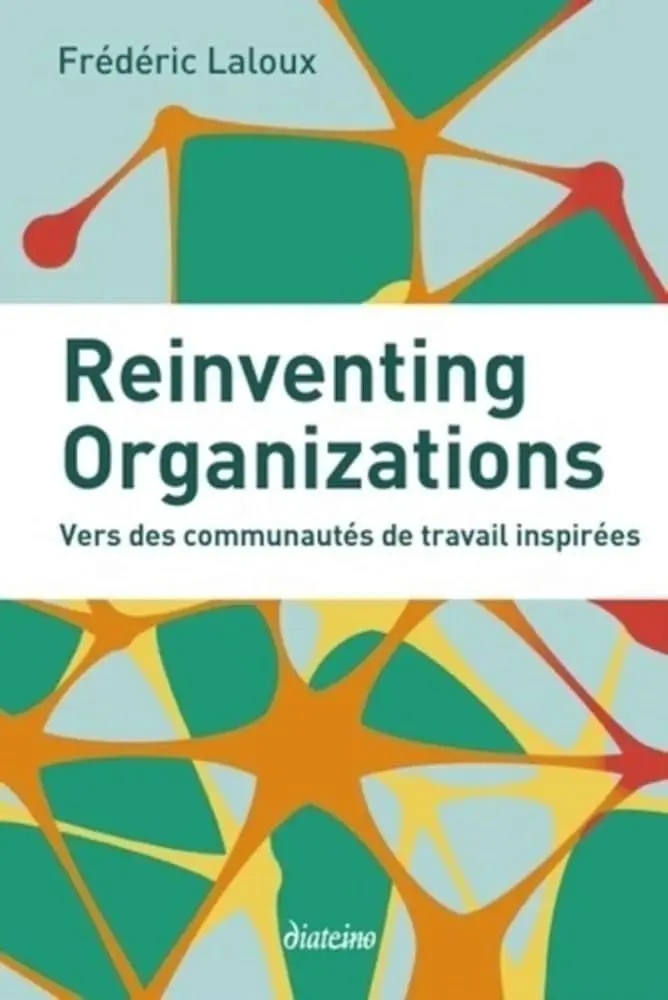
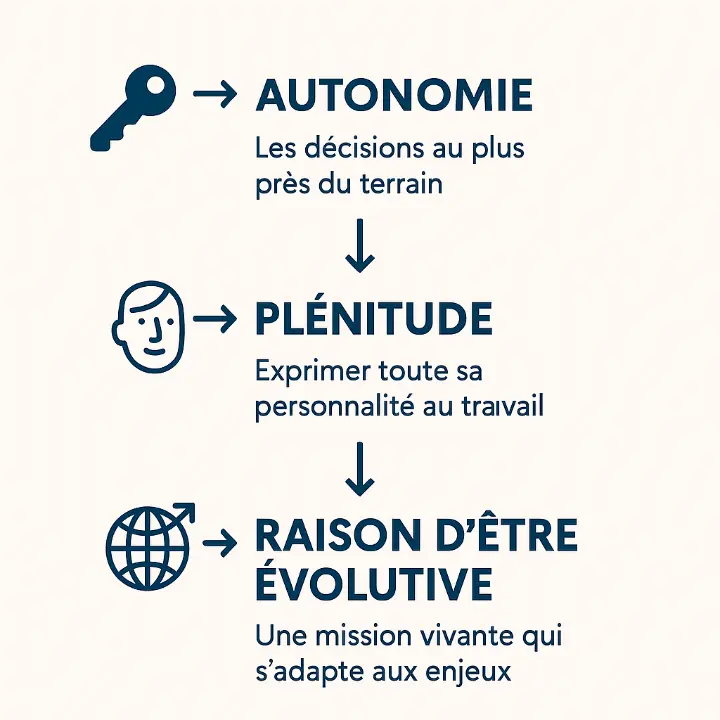
Popularisé par Frederic Laloux dans Reinventing Organizations, le modèle OPALE repose sur trois piliers :
- Autonomie
Les décisions se prennent au plus près du terrain. Les collaborateurs disposent de la confiance nécessaire pour agir, sans devoir remonter chaque validation à la hiérarchie.
Exemple : chez FAVI, les équipes de production décident elles-mêmes de l’organisation de leur planning en fonction des besoins clients. - Plénitude
Le travail n’est plus un rôle à jouer, mais un espace où l’on peut exprimer toute sa personnalité. Cela réduit la distance entre “qui je suis” et “ce que je fais”.
Résultat : une meilleure cohésion, moins de stress, un climat social plus apaisé. - Raison d’être évolutive
L’organisation se définit par une mission vivante, capable d’évoluer au gré des enjeux de société.
Exemple : la MAIF a fait évoluer sa raison d’être pour intégrer l’impact social et environnemental dans sa stratégie.
Conditions de réussite :
- Transparence des informations.
- Confiance comme valeur cardinale.
- Maturité managériale pour accepter le lâcher-prise.
3. Mode d’emploi : appliquer le modèle OPALE à la RSE
Mettre en œuvre la RSE dans une logique inspirée de l’OPALE ne consiste pas à plaquer un modèle idéal, mais à s’appuyer sur ses principes pour transformer en profondeur la manière dont la RSE est pensée, décidée et vécue au quotidien.
🔹 Étape 1 : De la RSE pilotée par le haut à une dynamique partagée
La plupart des entreprises lancent leur stratégie RSE par le sommet, avec des orientations définies au COMEX. Mais sans appropriation des équipes, ces ambitions restent souvent théoriques.
Le modèle OPALE invite à faire l’inverse : co-construire la démarche avec ceux qui la feront vivre.
Un exemple concret : certaines organisations ont créé des cercles RSE sur le modèle de la gouvernance partagée. Chaque cercle regroupe des collaborateurs de différents services (achats, RH, opérations, marketing…) et se voit confier un mandat clair : prioriser les enjeux, proposer des actions et décider de leur mise en œuvre. Ce type de dispositif favorise l’engagement parce qu’il redonne du pouvoir d’agir.
🔹Étape 2 : Redonner de l’autonomie aux ambassadeurs RSE
Dans beaucoup d’entreprises, on nomme des référents RSE mais sans leur donner réellement les moyens d’agir. L’approche OPALE change la donne : l’ambassadeur RSE n’est pas un relais de communication mais un acteur décisionnaire.
Prenons l’exemple d’une direction logistique : si l’ambassadeur RSE de ce service identifie un projet d’optimisation des tournées de livraison pour réduire les émissions, il doit avoir la capacité de valider le test, mobiliser des collègues et piloter le projet, sans attendre un arbitrage interminable. L’autonomie devient alors le moteur d’innovation durable.
🔹 Étape 3 : Mobiliser la plénitude pour engager autour de la RSE
La RSE touche aux convictions personnelles : climat, égalité, inclusion, santé… autant de sujets où chacun a une sensibilité propre. Le modèle OPALE valorise la plénitude : permettre à chacun d’apporter ses valeurs, idées et émotions dans le collectif.
Concrètement, cela peut passer par des rituels collaboratifs où les équipes partagent des initiatives personnelles (mobilité douce, réduction des déchets, bénévolat associatif) et les transposent en projets collectifs.
Une entreprise de services a par exemple lancé son plan de mobilité durable après que plusieurs salariés cyclistes ont témoigné de leur expérience : parking vélo, indemnité kilométrique verte, flotte partagée. La plénitude devient alors un catalyseur de projets authentiques et fédérateurs.
🔹 Étape 4 : Une raison d’être qui évolue avec la RSE
e troisième pilier OPALE – la raison d’être évolutive – est sans doute le plus puissant pour la RSE. Il ne s’agit plus d’inscrire la raison d’être dans le marbre une fois pour toutes, mais de l’enrichir régulièrement au fil des attentes sociétales.
Certaines entreprises organisent désormais des revues annuelles de la raison d’être : une fois par an, un panel de collaborateurs, clients et parties prenantes se réunit pour vérifier si la raison d’être est toujours alignée avec les enjeux actuels (climat, inclusion, biodiversité). Cette pratique évite l’écueil du greenwashing et installe la RSE comme une dynamique vivante, en mouvement.
Appliquer l’OPALE à la RSE, ce n’est pas multiplier les comités et les indicateurs. C’est changer de posture organisationnelle : passer d’un projet piloté par une poignée d’experts à une dynamique vivante, incarnée, où chacun peut contribuer à transformer l’entreprise.
L'entreprise libérée chez IDS Media
Pouvez-vous nous dire pourquoi IDS Media a choisi de devenir une entreprise libérée ?
« Nous avons adopté le modèle des entreprises libérées pour placer l’humain au centre de notre fonctionnement. Chez IDS Media, les membres de l’équipe n’occupent pas un poste figé, mais incarnent plusieurs rôles selon les besoins et les projets. Cette souplesse nous permet de mieux répondre aux enjeux RSE, d’innover collectivement et de vivre notre raison d’être de manière partagée. »Quels bénéfices concrets avez-vous observés depuis la mise en place de ce modèle ?
« L'autonomie accordée à chacun nous a permis de renforcer notre engagement. Par exemple, nous avons réduit notre empreinte carbone grâce à des actions simples, concrètes et co-construites : Green IT, matériel reconditionné, écrans basse consommation, encre végétale… Chaque initiative vient des équipes, avec un vrai pouvoir d’agir. »Quel conseil donneriez-vous à une entreprise qui hésite à adopter ce modèle ?
« Ne pensez pas à appliquer un modèle parfait de l’extérieur, mais commencez par des petits dispositifs : redéfinissez des rôles, testez des projets autonomes, installez des espaces de confiance. L’important, c’est de laisser la place à l’initiative – ensuite, l’élan collectif peut vraiment prendre forme. »
📚 Pour aller plus loin
- Isaac Getz & Brian Carney, Liberté & Cie, Fayard, 2012 : https://www.fayard.fr/liberte-cie-9782213656279
- Frederic Laloux, Reinventing Organizations, 2014 : https://www.reinventingorganizations.com/
- Gallup – State of the Global Workplace 2022 : https://www.gallup.com/workplace/349484/state-of-the-global-workplace-2022-report.aspx
- Harvard Business Review – The Business Case for Empowerment (2020) : https://hbr.org/2020/09/the-business-case-for-empowerment
- Deloitte – Global Human Capital Trends 2021 : https://www2.deloitte.com/global/en/pages/human-capital/articles/human-capital-trends.html
-
Études de cas :
- FAVI : https://fr.wikipedia.org/wiki/FAVI
- Poult : https://entreprises.coop/fr/cooperative/poult
- Chronoflex : https://www.chronoflex.fr/
- MAIF : https://entreprise.maif.fr/
Cet article découle du Café des labellisés du 1er juillet 2025, merci à :